The Routine Behind No-Filter, Natural Glow Skin
Natural glow skin isn't a filter or a lucky gene. It's hydration, sleep, the right actives, and consistency. Build the conditions and the skin follows.

The Glow Up Reset

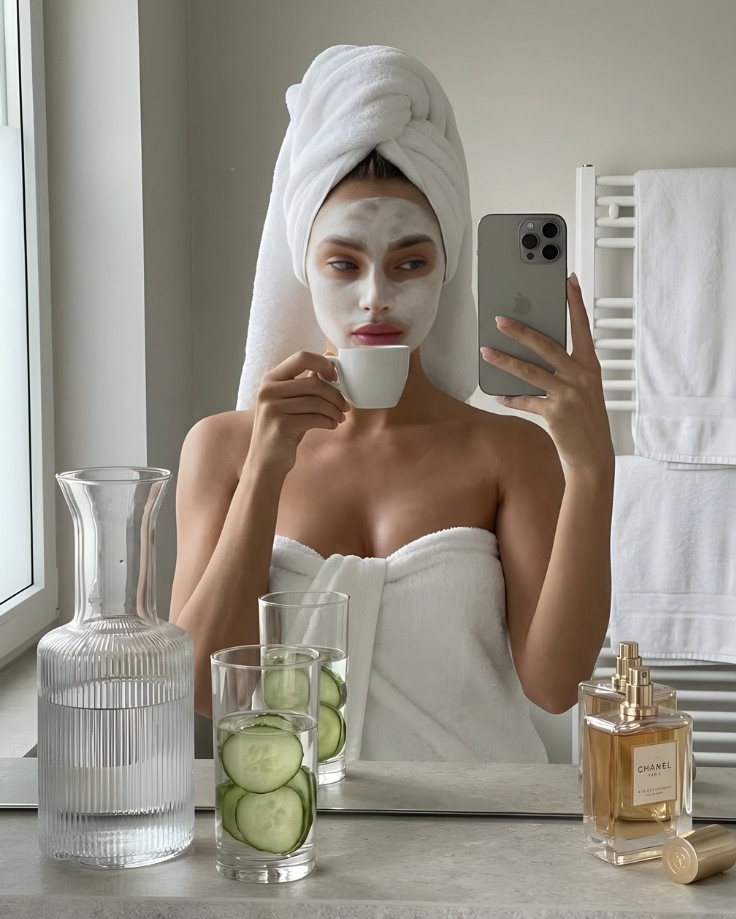
There is a kind of skin that stops you mid-scroll. Not the airbrushed, filtered, over-lit kind. The real kind. Skin that looks like it is lit from within, that is clear without being flat, plump without being puffy, even without being edited. The kind that makes you want to ask what someone is using, even when the answer is surprisingly little.
Natural glow skin is having its cultural moment, and for good reason. After years of heavy coverage, intense treatments, and a skincare industry that convinced us our faces needed fixing, the conversation has shifted. The goal now is not to cover skin up but to bring it to a state where covering it up feels unnecessary. Fewer products, more intention. Less correction, more nourishment.
But here is the thing about that effortless, no-filter glow: it is not effortless at all. It is the visible outcome of a consistent routine that works on multiple levels simultaneously, topically, nutritionally, hormonally, and through the lifestyle habits that either support or undermine everything else. The good news is that once you understand what actually produces it, the routine is simpler than you think.
This is everything you need to know, and everything you need to do.
Member-Only
This content is member-only
Please purchase a membership to continue reading.
1,000+ Happy Customers
Join The Glow Up Reset
Billed yearly
$
9,99/mo
Members-only weekly articles
Monthly challenges
E-books
Exclusive brand discount codes
Seasonal shopping guides
Already have an account?
There is a kind of skin that stops you mid-scroll. Not the airbrushed, filtered, over-lit kind. The real kind. Skin that looks like it is lit from within, that is clear without being flat, plump without being puffy, even without being edited. The kind that makes you want to ask what someone is using, even when the answer is surprisingly little.
Natural glow skin is having its cultural moment, and for good reason. After years of heavy coverage, intense treatments, and a skincare industry that convinced us our faces needed fixing, the conversation has shifted. The goal now is not to cover skin up but to bring it to a state where covering it up feels unnecessary. Fewer products, more intention. Less correction, more nourishment.
But here is the thing about that effortless, no-filter glow: it is not effortless at all. It is the visible outcome of a consistent routine that works on multiple levels simultaneously, topically, nutritionally, hormonally, and through the lifestyle habits that either support or undermine everything else. The good news is that once you understand what actually produces it, the routine is simpler than you think.
This is everything you need to know, and everything you need to do.
Understanding What Creates the Glow
Before you can build the routine, you need to understand the biology. Natural skin luminosity is not a single thing. It is the convergence of several simultaneous conditions: good circulation delivering oxygen and nutrients to skin cells, an intact barrier that retains moisture and reflects light evenly, a cell turnover rate that keeps the surface fresh and clear, and an absence of the chronic low-grade inflammation that creates redness, congestion, and the dull, uneven tone that no highlighter can convincingly fix.
When dermatologists and aestheticians talk about skin health rather than skin appearance, this is what they mean. Healthy skin glows not because of what has been applied to it but because of what is happening inside it. The most sophisticated skincare routine in the world delivers a fraction of its potential if the internal and lifestyle conditions that support these biological processes are not in place.
"The glow is not a product. It is a state. And it is built from the inside out, from the quality of your sleep, your food, your stress levels, and your skin barrier, before a single serum is applied."
This does not mean topical skincare is irrelevant. It means it works best as a support layer for a system that is already functioning well, rather than as a compensation strategy for one that is not.
The Internal Foundations of Glowing Skin
Hydration: the original skin serum
The simplest and most consistently underestimated driver of skin luminosity is adequate hydration. Water is required for every cellular process in the skin, including the synthesis of new collagen, the transport of nutrients to skin cells, and the maintenance of the plump, turgid quality that allows light to reflect evenly from the surface. Even mild dehydration produces visible dullness within hours, a flatness that no topical product fully compensates for.
Two to two and a half liters of fluid per day from all sources is the foundational minimum. Adding electrolytes, particularly sodium, potassium, and magnesium, improves cellular hydration meaningfully beyond water alone. Herbal teas, water-rich vegetables, and mineral-rich broths all contribute. The quality of your hydration is as important as the quantity.
The glow foods worth prioritizing
What you eat is literally what your skin is made of. Collagen is synthesized from amino acids derived from dietary protein. The lipid barrier is built from dietary fats. Antioxidant protection comes from the vitamins and polyphenols in plant foods. The research on diet and skin health is not ambiguous: the women with the most consistently luminous skin are, without exception, eating in ways that support it.
Food category | Key nutrients | Skin benefit |
|---|---|---|
Oily fish (salmon, sardines, mackerel) | Omega-3 fatty acids, vitamin D, astaxanthin | Reduces inflammation, supports barrier lipids, improves skin hydration and elasticity |
Colorful vegetables and berries | Vitamin C, polyphenols, carotenoids | Collagen synthesis, antioxidant protection, brightening of uneven pigmentation |
Eggs and quality protein | Complete amino acids, zinc, biotin | Collagen and elastin precursors, cell repair and renewal, sebum regulation |
Fermented foods (yogurt, kefir, kimchi) | Live cultures, short-chain fatty acids | Gut microbiome diversity, reduced systemic inflammation, improved skin clarity |
Extra virgin olive oil, avocado, nuts | Monounsaturated fats, vitamin E, squalene | Barrier support, anti-inflammatory, antioxidant protection against UV damage |
Dark leafy greens | Magnesium, folate, vitamin K, iron | Circulation, oxygenation of skin cells, reduced puffiness and dark circles |
Sleep as a skincare non-negotiable
Sleep is the most powerful overnight skincare treatment available, and it is free. During deep slow-wave sleep, growth hormone triggers collagen synthesis and cellular repair. Cortisol reaches its daily low point, allowing collagen production to proceed without inhibition. The skin barrier actively rebuilds. The glymphatic system clears metabolic waste. The immune system regulates inflammation.
A single night of poor sleep produces measurable and visible skin changes within 24 hours: increased dullness, puffiness, reactivity, and the specific flatness that comes from a barrier that has not been given adequate time to repair. Consistently poor sleep produces measurable acceleration of skin aging. No serum compensates for it. Seven to nine hours of quality sleep, protected and prioritized, is the highest-return investment in your skin available.
The Topical Routine: Building Blocks of the Glow
With strong internal foundations, the topical routine becomes significantly more effective. These are the steps and ingredients with the strongest evidence base for producing the specific outcomes that contribute to visible luminosity: even tone, smooth texture, plump hydration, and a barrier that reflects light rather than scattering it.
The morning routine for glow
AM glow routine
Gentle cleanse or cool water rinse: a full cleanse is often unnecessary in the morning. Cool water preserves the skin's natural microbiome and the lipid film that contributes to morning luminosity.
Vitamin C serum on damp skin: the most evidence-backed brightening and antioxidant ingredient in skincare. Applied consistently every morning, it is transformative over three to six months.
Hydrating serum with hyaluronic acid, glycerin, or polyglutamic acid: creates the plumpness that is the physical foundation of visible luminosity. Apply to damp skin and press gently.
Moisturizer with niacinamide: reduces pore appearance, regulates sebum, strengthens the barrier, reduces redness, and evens skin tone. Five to ten percent is the evidence-backed sweet spot.
Broad-spectrum SPF 30 to 50, every single day: simultaneously the most anti-aging and most pro-glow step in any routine. UV damage is the primary driver of everything that undermines natural luminosity over time.
The evening routine for glow
PM glow routine
Double cleanse thoroughly: oil or balm cleanser first to dissolve SPF and makeup, followed by a gentle water-based cleanser. Residual SPF and pollution are among the most significant sources of overnight skin damage.
Exfoliating acid two to three evenings per week: AHAs dissolve dead skin cell bonds, dramatically improving the skin's ability to reflect light. Glycolic for maximum efficacy, lactic for gentler results. Use on evenings when you are not using retinol.
Retinol or retinoid two to three evenings per week: the most extensively researched active in skincare. Accelerates cell turnover, stimulates collagen, fades pigmentation, refines texture. The adjustment period of four to eight weeks is worth every week.
Rich moisturizer or facial oil as the final step: squalane, a ceramide-rich cream, or a plant-based oil seals everything in, minimizes overnight water loss, and supports the barrier repair that happens while you sleep.
The Lifestyle Habits That Change Everything
The gap between a consistent skincare routine and genuinely glowing skin is almost always explained by lifestyle factors. These are not optional extras. They are the variables that determine whether the rest of the routine works at its full potential or significantly below it.
Stress management Chronic cortisol breaks down collagen, increases sebum production, drives inflammatory skin conditions, and impairs barrier function. Managing stress is not separate from skincare. It is skincare, and it is the variable most consistently left out of the conversation. |
Consistent movement Regular aerobic exercise increases blood flow and oxygen delivery to skin cells while supporting lymphatic drainage. The post-exercise circulation boost, experienced temporarily after each session, becomes a baseline skin quality with consistent practice over months. |
Alcohol reduction Alcohol is one of the most potent skin dehydrators available. It suppresses vasopressin (the hormone that regulates water retention), dilates blood vessels (producing persistent redness), and disrupts sleep architecture, compounding its direct effects on skin quality. |
Screen and sun protection Consistent SPF and physical sun avoidance (shade, hats, UV-protective clothing) during peak hours prevents the UV damage that is the single largest driver of uneven pigmentation and collagen loss over time. The most effective anti-aging habit is also the most accessible. |
The Glow Ingredients Worth Understanding
Beyond the foundational routine, these specific ingredients have meaningful evidence for enhancing skin luminosity and are worth incorporating strategically rather than impulsively.
Tranexamic acid: one of the most effective pigmentation-targeting ingredients available. Strong evidence for melasma and post-inflammatory hyperpigmentation, and well tolerated by melanin-rich skin tones.
Alpha arbutin: gently inhibits melanin production without irritation. Best used consistently over three to six months for visible brightening results.
Azelaic acid: brightening, anti-inflammatory, and anti-acne in one ingredient. Particularly effective for redness and post-inflammatory marks, and safe during pregnancy.
Bakuchiol: a plant-derived retinol alternative with comparable efficacy for texture and tone, and significantly lower irritation potential. The best starting point for retinol-sensitive skin.
Peptides: signal skin cells to produce more collagen, elastin, and hyaluronic acid. Apply after actives and before moisturizer for maximum contact time and efficacy.
Frequently Asked Questions
How long does it take to get naturally glowing skin?
Meaningful improvement in skin luminosity is typically visible within four to six weeks of consistent routine implementation, aligned with the skin's natural cell turnover cycle. More significant improvements in texture, pigmentation, and overall clarity develop over three to six months of consistent active ingredient use. Internal changes including improved hydration and sleep quality can produce visible results within two to three weeks.
What is the single most important thing for glowing skin?
Consistent daily SPF combined with daily vitamin C in the morning and regular retinoid use in the evening form the trio with the strongest collective evidence for improving skin luminosity over time. If forced to choose one, consistent broad-spectrum SPF is the non-negotiable foundation without which every other skincare investment underperforms significantly.
Can food really give you glowing skin?
Yes, directly and significantly. The skin is constructed from dietary nutrients: collagen from protein, barrier lipids from dietary fat, antioxidant protection from plant foods. The gut microbiome, fed by dietary fiber and fermented foods, regulates systemic inflammation in ways that directly affect skin clarity and tone. Nutritional optimization produces visible skin improvements on the same timescale as consistent topical routines, and the two approaches work synergistically.
Why does my skin look dull even when I use good skincare?
Persistent dullness despite a good topical routine is almost always explained by internal factors: dehydration, poor sleep, chronic stress, nutritional deficiencies, or insufficient cellular turnover. Assessing and addressing these variables, particularly hydration, sleep quality, and consistent use of an exfoliating acid and retinoid, typically resolves dullness more effectively than adding new products to an already established routine.
Is natural glow skin achievable for all skin tones and types?
Absolutely. The biological processes that produce skin luminosity, good circulation, optimal hydration, barrier integrity, and controlled cell turnover, operate across all skin tones and types. The specific ingredients and approaches may differ (melanin-rich skin tones benefit particularly from tranexamic acid and azelaic acid for pigmentation, and may require more gradual introduction of exfoliating acids) but the foundational principles and the achievable outcome are universal.
The Takeaway
The no-filter glow is not an accident, a filter, or a fortunate combination of genetics. It is the visible result of skin that is genuinely healthy: hydrated from within, nourished by food, protected from the sun, turned over regularly with the right actives, and supported by the sleep and stress management that allow all of it to work.
The routine is not complicated. It is consistent. Vitamin C every morning. SPF without exception. Exfoliation and retinol in rotation at night. A diet that nourishes the skin from within. Sleep that is protected rather than sacrificed. Stress that is managed rather than accumulated.
Build these habits one at a time, in the order that feels most accessible, and stay with them long enough to let the skin respond. It will. It always does, when you give it what it actually needs rather than what the algorithm is currently selling.
There is a kind of skin that stops you mid-scroll. Not the airbrushed, filtered, over-lit kind. The real kind. Skin that looks like it is lit from within, that is clear without being flat, plump without being puffy, even without being edited. The kind that makes you want to ask what someone is using, even when the answer is surprisingly little.
Natural glow skin is having its cultural moment, and for good reason. After years of heavy coverage, intense treatments, and a skincare industry that convinced us our faces needed fixing, the conversation has shifted. The goal now is not to cover skin up but to bring it to a state where covering it up feels unnecessary. Fewer products, more intention. Less correction, more nourishment.
But here is the thing about that effortless, no-filter glow: it is not effortless at all. It is the visible outcome of a consistent routine that works on multiple levels simultaneously, topically, nutritionally, hormonally, and through the lifestyle habits that either support or undermine everything else. The good news is that once you understand what actually produces it, the routine is simpler than you think.
This is everything you need to know, and everything you need to do.
Member-Only
This content is member-only
Please purchase a membership to continue reading.
1,000+ Happy Customers
Join The Glow Up Reset
Billed yearly
$
9,99/mo
Members-only weekly articles
Monthly challenges
E-books
Exclusive brand discount codes
Seasonal shopping guides
Already have an account?
There is a kind of skin that stops you mid-scroll. Not the airbrushed, filtered, over-lit kind. The real kind. Skin that looks like it is lit from within, that is clear without being flat, plump without being puffy, even without being edited. The kind that makes you want to ask what someone is using, even when the answer is surprisingly little.
Natural glow skin is having its cultural moment, and for good reason. After years of heavy coverage, intense treatments, and a skincare industry that convinced us our faces needed fixing, the conversation has shifted. The goal now is not to cover skin up but to bring it to a state where covering it up feels unnecessary. Fewer products, more intention. Less correction, more nourishment.
But here is the thing about that effortless, no-filter glow: it is not effortless at all. It is the visible outcome of a consistent routine that works on multiple levels simultaneously, topically, nutritionally, hormonally, and through the lifestyle habits that either support or undermine everything else. The good news is that once you understand what actually produces it, the routine is simpler than you think.
This is everything you need to know, and everything you need to do.
Understanding What Creates the Glow
Before you can build the routine, you need to understand the biology. Natural skin luminosity is not a single thing. It is the convergence of several simultaneous conditions: good circulation delivering oxygen and nutrients to skin cells, an intact barrier that retains moisture and reflects light evenly, a cell turnover rate that keeps the surface fresh and clear, and an absence of the chronic low-grade inflammation that creates redness, congestion, and the dull, uneven tone that no highlighter can convincingly fix.
When dermatologists and aestheticians talk about skin health rather than skin appearance, this is what they mean. Healthy skin glows not because of what has been applied to it but because of what is happening inside it. The most sophisticated skincare routine in the world delivers a fraction of its potential if the internal and lifestyle conditions that support these biological processes are not in place.
"The glow is not a product. It is a state. And it is built from the inside out, from the quality of your sleep, your food, your stress levels, and your skin barrier, before a single serum is applied."
This does not mean topical skincare is irrelevant. It means it works best as a support layer for a system that is already functioning well, rather than as a compensation strategy for one that is not.
The Internal Foundations of Glowing Skin
Hydration: the original skin serum
The simplest and most consistently underestimated driver of skin luminosity is adequate hydration. Water is required for every cellular process in the skin, including the synthesis of new collagen, the transport of nutrients to skin cells, and the maintenance of the plump, turgid quality that allows light to reflect evenly from the surface. Even mild dehydration produces visible dullness within hours, a flatness that no topical product fully compensates for.
Two to two and a half liters of fluid per day from all sources is the foundational minimum. Adding electrolytes, particularly sodium, potassium, and magnesium, improves cellular hydration meaningfully beyond water alone. Herbal teas, water-rich vegetables, and mineral-rich broths all contribute. The quality of your hydration is as important as the quantity.
The glow foods worth prioritizing
What you eat is literally what your skin is made of. Collagen is synthesized from amino acids derived from dietary protein. The lipid barrier is built from dietary fats. Antioxidant protection comes from the vitamins and polyphenols in plant foods. The research on diet and skin health is not ambiguous: the women with the most consistently luminous skin are, without exception, eating in ways that support it.
Food category | Key nutrients | Skin benefit |
|---|---|---|
Oily fish (salmon, sardines, mackerel) | Omega-3 fatty acids, vitamin D, astaxanthin | Reduces inflammation, supports barrier lipids, improves skin hydration and elasticity |
Colorful vegetables and berries | Vitamin C, polyphenols, carotenoids | Collagen synthesis, antioxidant protection, brightening of uneven pigmentation |
Eggs and quality protein | Complete amino acids, zinc, biotin | Collagen and elastin precursors, cell repair and renewal, sebum regulation |
Fermented foods (yogurt, kefir, kimchi) | Live cultures, short-chain fatty acids | Gut microbiome diversity, reduced systemic inflammation, improved skin clarity |
Extra virgin olive oil, avocado, nuts | Monounsaturated fats, vitamin E, squalene | Barrier support, anti-inflammatory, antioxidant protection against UV damage |
Dark leafy greens | Magnesium, folate, vitamin K, iron | Circulation, oxygenation of skin cells, reduced puffiness and dark circles |
Sleep as a skincare non-negotiable
Sleep is the most powerful overnight skincare treatment available, and it is free. During deep slow-wave sleep, growth hormone triggers collagen synthesis and cellular repair. Cortisol reaches its daily low point, allowing collagen production to proceed without inhibition. The skin barrier actively rebuilds. The glymphatic system clears metabolic waste. The immune system regulates inflammation.
A single night of poor sleep produces measurable and visible skin changes within 24 hours: increased dullness, puffiness, reactivity, and the specific flatness that comes from a barrier that has not been given adequate time to repair. Consistently poor sleep produces measurable acceleration of skin aging. No serum compensates for it. Seven to nine hours of quality sleep, protected and prioritized, is the highest-return investment in your skin available.
The Topical Routine: Building Blocks of the Glow
With strong internal foundations, the topical routine becomes significantly more effective. These are the steps and ingredients with the strongest evidence base for producing the specific outcomes that contribute to visible luminosity: even tone, smooth texture, plump hydration, and a barrier that reflects light rather than scattering it.
The morning routine for glow
AM glow routine
Gentle cleanse or cool water rinse: a full cleanse is often unnecessary in the morning. Cool water preserves the skin's natural microbiome and the lipid film that contributes to morning luminosity.
Vitamin C serum on damp skin: the most evidence-backed brightening and antioxidant ingredient in skincare. Applied consistently every morning, it is transformative over three to six months.
Hydrating serum with hyaluronic acid, glycerin, or polyglutamic acid: creates the plumpness that is the physical foundation of visible luminosity. Apply to damp skin and press gently.
Moisturizer with niacinamide: reduces pore appearance, regulates sebum, strengthens the barrier, reduces redness, and evens skin tone. Five to ten percent is the evidence-backed sweet spot.
Broad-spectrum SPF 30 to 50, every single day: simultaneously the most anti-aging and most pro-glow step in any routine. UV damage is the primary driver of everything that undermines natural luminosity over time.
The evening routine for glow
PM glow routine
Double cleanse thoroughly: oil or balm cleanser first to dissolve SPF and makeup, followed by a gentle water-based cleanser. Residual SPF and pollution are among the most significant sources of overnight skin damage.
Exfoliating acid two to three evenings per week: AHAs dissolve dead skin cell bonds, dramatically improving the skin's ability to reflect light. Glycolic for maximum efficacy, lactic for gentler results. Use on evenings when you are not using retinol.
Retinol or retinoid two to three evenings per week: the most extensively researched active in skincare. Accelerates cell turnover, stimulates collagen, fades pigmentation, refines texture. The adjustment period of four to eight weeks is worth every week.
Rich moisturizer or facial oil as the final step: squalane, a ceramide-rich cream, or a plant-based oil seals everything in, minimizes overnight water loss, and supports the barrier repair that happens while you sleep.
The Lifestyle Habits That Change Everything
The gap between a consistent skincare routine and genuinely glowing skin is almost always explained by lifestyle factors. These are not optional extras. They are the variables that determine whether the rest of the routine works at its full potential or significantly below it.
Stress management Chronic cortisol breaks down collagen, increases sebum production, drives inflammatory skin conditions, and impairs barrier function. Managing stress is not separate from skincare. It is skincare, and it is the variable most consistently left out of the conversation. |
Consistent movement Regular aerobic exercise increases blood flow and oxygen delivery to skin cells while supporting lymphatic drainage. The post-exercise circulation boost, experienced temporarily after each session, becomes a baseline skin quality with consistent practice over months. |
Alcohol reduction Alcohol is one of the most potent skin dehydrators available. It suppresses vasopressin (the hormone that regulates water retention), dilates blood vessels (producing persistent redness), and disrupts sleep architecture, compounding its direct effects on skin quality. |
Screen and sun protection Consistent SPF and physical sun avoidance (shade, hats, UV-protective clothing) during peak hours prevents the UV damage that is the single largest driver of uneven pigmentation and collagen loss over time. The most effective anti-aging habit is also the most accessible. |
The Glow Ingredients Worth Understanding
Beyond the foundational routine, these specific ingredients have meaningful evidence for enhancing skin luminosity and are worth incorporating strategically rather than impulsively.
Tranexamic acid: one of the most effective pigmentation-targeting ingredients available. Strong evidence for melasma and post-inflammatory hyperpigmentation, and well tolerated by melanin-rich skin tones.
Alpha arbutin: gently inhibits melanin production without irritation. Best used consistently over three to six months for visible brightening results.
Azelaic acid: brightening, anti-inflammatory, and anti-acne in one ingredient. Particularly effective for redness and post-inflammatory marks, and safe during pregnancy.
Bakuchiol: a plant-derived retinol alternative with comparable efficacy for texture and tone, and significantly lower irritation potential. The best starting point for retinol-sensitive skin.
Peptides: signal skin cells to produce more collagen, elastin, and hyaluronic acid. Apply after actives and before moisturizer for maximum contact time and efficacy.
Frequently Asked Questions
How long does it take to get naturally glowing skin?
Meaningful improvement in skin luminosity is typically visible within four to six weeks of consistent routine implementation, aligned with the skin's natural cell turnover cycle. More significant improvements in texture, pigmentation, and overall clarity develop over three to six months of consistent active ingredient use. Internal changes including improved hydration and sleep quality can produce visible results within two to three weeks.
What is the single most important thing for glowing skin?
Consistent daily SPF combined with daily vitamin C in the morning and regular retinoid use in the evening form the trio with the strongest collective evidence for improving skin luminosity over time. If forced to choose one, consistent broad-spectrum SPF is the non-negotiable foundation without which every other skincare investment underperforms significantly.
Can food really give you glowing skin?
Yes, directly and significantly. The skin is constructed from dietary nutrients: collagen from protein, barrier lipids from dietary fat, antioxidant protection from plant foods. The gut microbiome, fed by dietary fiber and fermented foods, regulates systemic inflammation in ways that directly affect skin clarity and tone. Nutritional optimization produces visible skin improvements on the same timescale as consistent topical routines, and the two approaches work synergistically.
Why does my skin look dull even when I use good skincare?
Persistent dullness despite a good topical routine is almost always explained by internal factors: dehydration, poor sleep, chronic stress, nutritional deficiencies, or insufficient cellular turnover. Assessing and addressing these variables, particularly hydration, sleep quality, and consistent use of an exfoliating acid and retinoid, typically resolves dullness more effectively than adding new products to an already established routine.
Is natural glow skin achievable for all skin tones and types?
Absolutely. The biological processes that produce skin luminosity, good circulation, optimal hydration, barrier integrity, and controlled cell turnover, operate across all skin tones and types. The specific ingredients and approaches may differ (melanin-rich skin tones benefit particularly from tranexamic acid and azelaic acid for pigmentation, and may require more gradual introduction of exfoliating acids) but the foundational principles and the achievable outcome are universal.
The Takeaway
The no-filter glow is not an accident, a filter, or a fortunate combination of genetics. It is the visible result of skin that is genuinely healthy: hydrated from within, nourished by food, protected from the sun, turned over regularly with the right actives, and supported by the sleep and stress management that allow all of it to work.
The routine is not complicated. It is consistent. Vitamin C every morning. SPF without exception. Exfoliation and retinol in rotation at night. A diet that nourishes the skin from within. Sleep that is protected rather than sacrificed. Stress that is managed rather than accumulated.
Build these habits one at a time, in the order that feels most accessible, and stay with them long enough to let the skin respond. It will. It always does, when you give it what it actually needs rather than what the algorithm is currently selling.
01.
How long does it take to get naturally glowing skin?
Meaningful improvement in skin luminosity is typically visible within four to six weeks of consistent routine implementation, aligned with the skin's natural cell turnover cycle. More significant improvements in texture, pigmentation, and overall clarity develop over three to six months of consistent active ingredient use. Internal changes including improved hydration and sleep quality can produce visible results within two to three weeks.
02.
What is the single most important thing for glowing skin?
Consistent daily SPF combined with daily vitamin C in the morning and regular retinoid use in the evening form the trio with the strongest collective evidence for improving skin luminosity over time. If forced to choose one, consistent broad-spectrum SPF is the non-negotiable foundation without which every other skincare investment underperforms significantly.
03.
Can food really give you glowing skin?
Yes, directly and significantly. The skin is constructed from dietary nutrients: collagen from protein, barrier lipids from dietary fat, antioxidant protection from plant foods. The gut microbiome, fed by dietary fiber and fermented foods, regulates systemic inflammation in ways that directly affect skin clarity and tone. Nutritional optimization produces visible skin improvements on the same timescale as consistent topical routines, and the two approaches work synergistically.
About



Explore Topics



Related Post

Retinol in winter goes wrong for a reason, and it is rarely the retinol. The frequency first method that builds tolerance without flaking, the difference between retinization and real barrier damage, and a two week repair protocol that actually works.

Your skin barrier, technically called the stratum corneum, is the outermost layer of your skin. Think of it as a brick wall, where skin cells are the bricks and lipids (ceramides, cholesterol, fatty acids) are the mortar holding everything together.

A five minute routine isn't a compromise, it can genuinely be the smarter choice, because it forces you to prioritize the products that are actually doing something.

Your skin is not a passive sponge. It is a sophisticated, semi permeable barrier designed to keep things out, including, inconveniently, some of the very actives you want to get in.

The gut-skin connection describes the two way relationship between your digestive system and your skin. Scientists often call this the gut-skin axis, a kind of internal messaging network where your gut microbiome, your immune system, and your skin all influence one another.

Retinol is evidence-backed but not universally tolerated. Bakuchiol, azelaic acid, and peptides deliver real results without the irritation. Your skin deserves what works for it.
Retinol in winter goes wrong for a reason, and it is rarely the retinol. The frequency first method that builds tolerance without flaking, the difference between retinization and real barrier damage, and a two week repair protocol that actually works.
Your skin barrier, technically called the stratum corneum, is the outermost layer of your skin. Think of it as a brick wall, where skin cells are the bricks and lipids (ceramides, cholesterol, fatty acids) are the mortar holding everything together.
A five minute routine isn't a compromise, it can genuinely be the smarter choice, because it forces you to prioritize the products that are actually doing something.
Your skin is not a passive sponge. It is a sophisticated, semi permeable barrier designed to keep things out, including, inconveniently, some of the very actives you want to get in.
Subscribe now to stay updated with top news !
Your glow up starts in your inbox. Subscribe to The Weekly Glow for expert-backed skincare routines, fitness plans that actually stick, clean recipes, gifts, and the mindset shifts that make it all click — delivered every week.



Subscribe now to stay updated with top news !
Your glow up starts in your inbox. Subscribe to The Weekly Glow for expert-backed skincare routines, fitness plans that actually stick, clean recipes, gifts, and the mindset shifts that make it all click — delivered every week.
Subscribe now to stay updated with top news !
Your glow up starts in your inbox. Subscribe to The Weekly Glow for expert-backed skincare routines, fitness plans that actually stick, clean recipes, gifts, and the mindset shifts that make it all click — delivered every week.