How to Sync Your Skincare With Your Hormones
Your skin follows your hormones. By adapting your skincare to each phase of your cycle, you reduce breakouts, boost glow, and stop fighting your own biology.
The Glow Up Reset

Your skin is not random. The breakout that appears like clockwork before your period, the glow you seem to radiate mid-cycle, the sudden sensitivity that makes your usual serum sting — none of it is a coincidence. Your hormones are running the show, and once you understand the rhythm, everything changes.
Cycle syncing, the practice of aligning your lifestyle, nutrition, and workouts with the phases of your menstrual cycle, has been gaining serious traction in wellness circles. But one of its most underexplored and genuinely exciting applications? Skincare. Your skin's needs shift dramatically across a 28-to-35-day cycle, driven by the rise and fall of estrogen, progesterone, and testosterone. When you stop applying the same products every single day and start listening to what your skin is actually asking for, the results can be transformational.
This is not about overcomplicating your routine. It is about working with your biology instead of against it, making your skincare smarter rather than more expensive or more exhausting. Think of it as the ultimate personalisation, already built into your body.
Understanding the Hormone-Skin Connection
Before you can sync your skincare, you need a basic understanding of what is happening hormonally throughout your cycle. Your menstrual cycle is governed primarily by four key players: estrogen, progesterone, testosterone (yes, women produce it too), and luteinising hormone (LH). Each of these fluctuates in distinct patterns across your cycle, and your skin's behaviour is a direct reflection of those shifts.
Estrogen, for example, is your skin's best friend. It stimulates collagen production, supports the skin barrier, retains moisture, and keeps pores looking refined. When estrogen rises, your skin tends to look its most luminous and clear. Progesterone, which dominates the second half of your cycle, increases sebum production and can cause puffiness and congestion. And right before your period, when both estrogen and progesterone drop sharply, inflammation spikes — hello, hormonal breakouts and heightened sensitivity.
"Your skin has its own infradian rhythm — a biological clock that runs on a roughly monthly cycle. When you honour that rhythm in your skincare, you stop fighting your skin and start partnering with it."
Understanding this is the foundation. Everything else, your products, your actives, your rituals, should be built around this knowledge.
The Four Phases of Your Cycle and What Your Skin Needs
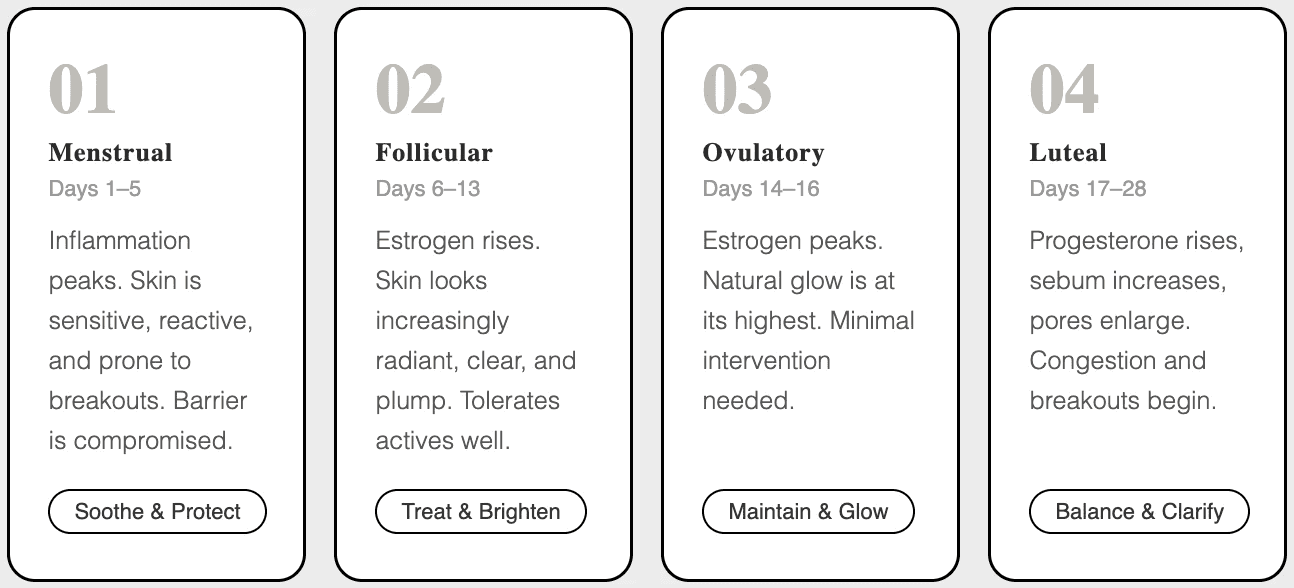
Your menstrual cycle is typically divided into four phases. Here is how your skin behaves in each, and how to adjust your routine accordingly.
Phase 1: The Menstrual Phase — Comfort First
During your period, prostaglandins (the compounds that trigger uterine contractions) also drive systemic inflammation, and your skin feels it. Both estrogen and progesterone are at their lowest, which means your skin barrier is weakened and its ability to retain moisture is compromised. This is not the time for aggressive exfoliation or retinol.
Your menstrual phase routine should focus entirely on supporting the skin barrier, calming redness and irritation, and keeping hydration locked in. Reach for a gentle, fragrance-free cleanser, a barrier-repairing moisturiser rich in ceramides and fatty acids, and a calming serum featuring niacinamide, centella asiatica, or aloe. Keep SPF in the routine, always, but opt for a mineral formula if your skin tends toward reactivity. This is not the week to introduce anything new.
Phase 2: The Follicular Phase — Your Skin's Renaissance
As estrogen begins climbing after your period ends, your skin starts to visibly recover. Collagen synthesis increases, the skin barrier strengthens, cellular turnover accelerates, and moisture retention improves. You will notice your complexion looking clearer, smoother, and more even-toned. This is your skin's golden window, the time when it is most resilient and most receptive to active ingredients.
Make the most of it. Introduce or return to vitamin C serums to enhance brightness, layer on hyaluronic acid for hydration, and if you use retinol or chemical exfoliants like glycolic or lactic acid, this is the phase to lean into them. Your skin can handle more and will reward you for it. A gentle enzyme exfoliant twice a week can also help clear away dead cell buildup and keep your glow going strong.
Phase 3: The Ovulatory Phase — Lean Into the Glow
Estrogen peaks around ovulation, and so does your skin. This is often the phase where you receive the most compliments, where your skin looks naturally dewy and your pores appear minimised. Testosterone also spikes briefly around ovulation, which can occasionally trigger a lone breakout in more androgen-sensitive skin, but for many, this phase is essentially worry-free.
Your routine can stay relatively minimal here. A good cleanser, a lightweight moisturiser, your vitamin C if it is working for you, and SPF. You do not need to add much. This is the season of effortless skin, so enjoy it without over-engineering it.
Phase 4: The Luteal Phase — Proactive and Strategic
The luteal phase is where most people run into trouble, and where cycle-synced skincare makes the biggest visible difference. As progesterone climbs, it signals the sebaceous glands to produce more oil. Pores become more visible. The skin's surface can feel thicker, more congested, and increasingly prone to breakouts, particularly along the jawline, chin, and cheeks. Toward the end of this phase, when both hormones drop sharply, inflammation spikes again and pre-menstrual skin can feel tight, sensitive, and angry all at once.
Your luteal phase routine should focus on oil regulation, gentle clarifying, and pre-emptive anti-inflammatory support. A salicylic acid cleanser used two to three times per week can help keep pores clear. Niacinamide is a standout here, regulating sebum while also calming redness. Lightweight, oil-free hydration keeps the barrier intact without contributing to congestion. As you approach day 28, ease back on actives and start transitioning into the gentler products you will lean on during menstruation.
Your Cycle-Synced Skincare Routine at a Glance
Phase | Key Ingredients | Avoid or Minimise | Ritual Tip |
|---|---|---|---|
Menstrual | Ceramides, centella asiatica, niacinamide, aloe, mineral SPF | Retinol, AHA, BHA, fragranced products, new actives | Switch to a richer night cream and add a facial oil to seal in moisture |
Follicular | Vitamin C, hyaluronic acid, retinol, glycolic acid, lactic acid | Overloading on heavy occlusives | Ideal time for a gua sha facial massage, exfoliation boosts circulation |
Ovulatory | Lightweight antioxidants, SPF, hydrating mist | Over-applying products, skipping SPF | A tinted SPF or a light coverage base is all you need |
Luteal | Salicylic acid, niacinamide, zinc, adaptogens, oil-free hydration | Heavy creams, coconut oil, pore-clogging ingredients | Clay mask once or twice a week to manage congestion and excess oil |
Ingredients That Work With Your Hormones, Not Against Them
Certain ingredients deserve a permanent seat at the table, regardless of phase, because they actively support hormonal skin health from the inside out and the outside in.
Niacinamide: The Hormonal Skin Hero
If there is one ingredient that earns its place in every phase of a cycle-synced routine, it is niacinamide. This form of vitamin B3 regulates sebum production, minimises pore appearance, reduces redness, and strengthens the barrier. It is non-irritating enough to use during the menstrual phase and effective enough to compete with stronger actives during the luteal phase.
Retinoids: Timing Is Everything
Retinol is one of skincare's most powerful tools for cellular turnover, collagen synthesis, and acne management, but its potential for irritation means timing matters. Reserve your retinoid for the follicular phase when your barrier is at its strongest and your skin can tolerate it best. Pause or significantly reduce usage during the menstrual phase to avoid compounding sensitivity.
Vitamin C: Estrogen's Best Partner
Estrogen and vitamin C are a natural pairing. As estrogen rises during the follicular and ovulatory phases, vitamin C's antioxidant and brightening properties are amplified by the skin's increased receptivity. Use a stable L-ascorbic acid serum in the morning to protect against UV damage and oxidative stress, and to make the most of your estrogen-driven collagen boost.
Salicylic Acid: Your Luteal Phase Lifeline
As a beta-hydroxy acid, salicylic acid is oil-soluble, meaning it penetrates deep into pores to dissolve sebum and prevent congestion before it becomes a breakout. Used two to three times per week during the luteal phase, it is one of the most effective tools for managing hormonally-driven acne, particularly the deep, cystic kind that tends to cluster along the jawline.
Lifestyle and Nutrition: The Internal Side of Hormonal Skincare
No topical routine, however well-timed, can fully compensate for what is happening inside your body. Hormonal skin health is deeply tied to how you live, what you eat, how you sleep, and how you manage stress. The good news is that cycle syncing extends beautifully into lifestyle, and small, intentional adjustments can make a visible difference in your skin.
Eat for Your Cycle
During the follicular and ovulatory phases, when estrogen is higher and metabolism is slightly more efficient, your body benefits from lighter, nourishing foods, think fermented vegetables, leafy greens, seeds, and lean proteins. During the luteal phase, when progesterone rises and cravings increase, focusing on foods that support liver detoxification (which helps process excess hormones) is particularly beneficial. Cruciferous vegetables like broccoli and Brussels sprouts are excellent here, alongside zinc-rich foods like pumpkin seeds and chickpeas, which support progesterone and reduce inflammation.
Manage Cortisol, Your Skin's Nemesis
Cortisol, the stress hormone, is one of the most disruptive forces for hormonal balance and skin health. Chronically elevated cortisol increases sebum production, breaks down collagen, impairs the skin barrier, and amplifies inflammation. During the luteal phase, when your body is already more stress-reactive, prioritising cortisol management is particularly important. Adaptogenic herbs like ashwagandha and rhodiola have shown promise in supporting the adrenal system, and practices like breathwork, yoga nidra, and even a slow morning ritual can make a measurable difference.
Sleep as a Skin Ritual
Growth hormone, which is responsible for cellular repair and regeneration, is predominantly released during deep sleep. Your skin does its most significant repair work overnight, which means sleep quality directly impacts how your skin looks and behaves. During the luteal phase, progesterone can disrupt sleep quality, so prioritising good sleep hygiene, cool temperatures, minimal blue light, and consistent bedtimes, becomes an act of skincare.
How to Start: A Practical First Step
The idea of overhauling your entire routine to sync with your cycle can feel overwhelming, but it does not have to be. Here is a gentle, accessible way to begin.
Track your cycle for one full month before making any changes. Note how your skin feels and behaves each week. Patterns will emerge quickly.
Audit your current products and identify which ones might be better suited to specific phases, your retinol for the follicular window, your niacinamide for the luteal phase.
Start with one phase adjustment only. Most people find the most dramatic results when they begin managing the luteal phase more intentionally. Introduce a BHA cleanser and a clay mask during days 17 to 28.
Keep a simple skin journal. It does not need to be elaborate. Just a quick daily note in your phone about skin texture, oiliness, and any breakouts. Over two to three months, the correlation between cycle day and skin behaviour becomes unmistakable.
Give it three cycles before drawing conclusions. Hormones are complex and influenced by stress, travel, illness, and sleep. Three months gives you enough data to see the real patterns.
01.
Does cycle-synced skincare work if I am on hormonal birth control?
Hormonal contraceptives suppress the natural hormonal fluctuations of the menstrual cycle, which means the classic four-phase pattern may not apply in the same way. That said, many people on the pill still notice skin changes throughout the month, often tied to the pill-free week. Listening to your skin's cues remains valuable regardless of contraceptive method. If you are unsure, consulting a dermatologist who understands hormonal skin is always a good step.
02.
Can hormonal skincare help with cystic acne?
Cycle-synced skincare can significantly reduce the frequency and severity of hormonal breakouts, particularly the deep, cystic kind that appears before menstruation. Strategic use of salicylic acid, niacinamide, and zinc during the luteal phase addresses the root causes at the surface level. For persistent or severe cystic acne, a dermatologist or endocrinologist can help identify any underlying hormonal imbalances that topical care alone cannot resolve.
03.
How long does it take to see results from a hormone-synced skincare routine?
Most people begin noticing improvements within one to two cycles, but three months is the benchmark for a fair assessment. Skin cell turnover takes approximately 28 days, and hormonal patterns need a few cycles to reveal themselves consistently. Patience and consistency are the most important ingredients in any hormonal skincare routine.
About



Explore Topics